

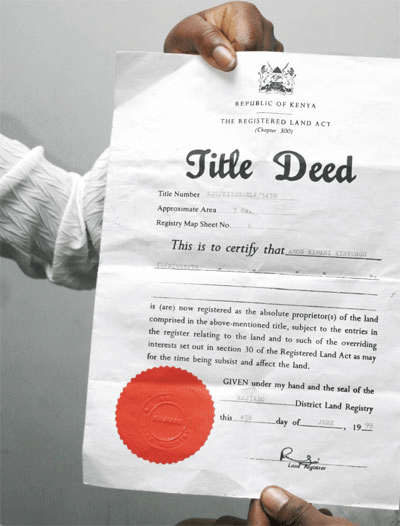
ENTITY DEED/TITLE DEED
This document establishes the ownership chain. It grants the owner total ownership rights. When buying a property, you should verify that the title deed is in the owner’s name. You can also get legal help by hiring a property lawyer for the purpose.
RELEVANT BUILDING PLAN
Every builder is required to obtain approval from the local planning authorities before beginning a new project. If a plan has not been approved, the development is unlawful, and you should avoid it. Before making an offer on the property, you should require that the builder show you the approved plan.
In Kenya, there are several mandatory construction approvals required before beginning any construction project. However, four of the most essential approvals are:
- Building Plan Approval: This approval is granted by the County Government after submitting a detailed building plan for the proposed construction. The plan should include architectural, structural, and engineering designs, among other essential details.
- Environmental Impact Assessment (EIA): This approval is required for any construction project that may have a significant impact on the environment. The National Environment Management Authority (NEMA) is responsible for issuing EIA certificates.
- National Construction Authority (NCA) Certification: This certification is mandatory for all contractors and construction workers who wish to work on any construction project in Kenya. It is issued by the NCA, which is the government body mandated with regulating the construction industry in Kenya.
- Occupational Health and Safety Approval: This approval is required for any construction project that involves the use of heavy machinery, working at heights, or other high-risk activities. It is granted by the Directorate of Occupational Health and Safety Services (DOHSS) after ensuring that the construction site meets all the necessary safety requirements.
OWNERSHIP CERTIFICATE
This is a critical document that the builder must provide to the buyer at the time of sale. First, as the project is completed, the municipal authorities issue a completion certificate, and the local government agency issues an occupancy certificate after inspecting the property and deeming it safe for residents.
In Kenya, there are various types of ownership certificates that are issued for different types of properties. Some of the most common types of ownership certificates include:
- Land Title Deed: This is a legal document issued by the government or relevant authorities that proves ownership of land. It includes information such as the size and location of the land, as well as the name of the owner.
- Share Certificate: This is a document issued to shareholders of a company that owns a property. It proves ownership of a portion of the property and gives the shareholder certain rights, such as voting rights and the right to receive dividends.
- Unit Certificate: This is a document issued to owners of individual units in a multi-unit development such as apartments or townhouses. It proves ownership of the individual unit and gives the owner certain rights, such as the right to use common areas.
- Stock Certificate: This is a document issued to shareholders of a real estate investment trust (REIT) that owns a property. It proves ownership of a portion of the REIT and gives the shareholder certain rights, such as voting rights and the right to receive dividends.
- Condominium Certificate: This is a document issued to owners of individual units in a condominium development. It proves ownership of the individual unit and gives the owner certain rights, such as the right to use common areas.
- Cooperative Certificate: This is a document issued to members of a housing cooperative. It proves ownership of a portion of the cooperative and gives the member certain rights, such as the right to occupy a housing unit.
TAX RECEIPTS
It is critical that the seller or builder show you all of the legal tax pay receipts because if he does not, the government will levy a monthly penalty on the buyer.
legal tax payment receipts are issued by the Kenya Revenue Authority (KRA) to individuals or businesses that have paid their taxes. These receipts serve as proof of payment for taxes and are necessary for various purposes such as filing tax returns, obtaining government licenses and permits, and securing loans.
To obtain a tax payment receipt in Kenya, taxpayers need to follow these steps:
- Pay taxes due to the KRA through the designated payment channels such as banks, mobile money platforms, or online platforms.
- Once payment is made, the taxpayer will receive a payment confirmation message via SMS or email.
- The taxpayer can then log in to the KRA iTax portal using their PIN number to download and print the payment receipt.
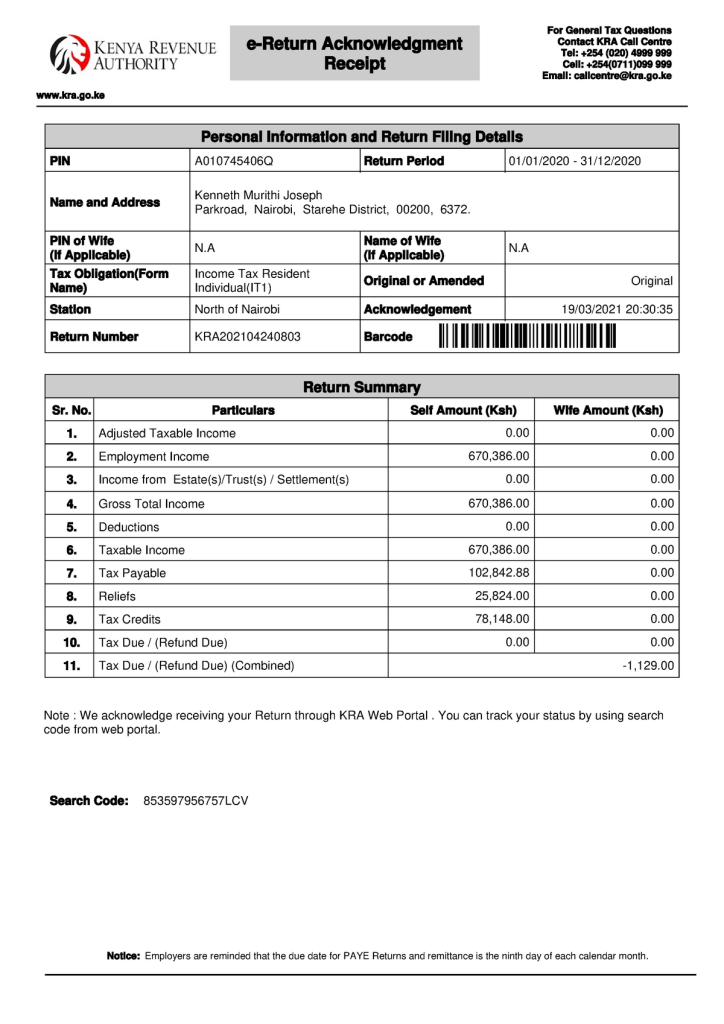
It is important to note that failure to obtain or produce valid tax payment receipts may result in penalties or legal action by the KRA. Therefore, it is crucial for taxpayers to ensure that they obtain and keep accurate tax payment records.
CERTIFICATE OF INCUMBRANCE
This is approved by the sub-registrar and is used to establish whether or not there are any encumbrances on the real estate, such as charges, mortgages, and so on. This is a detailed document that details the status of the property’s legal obligations. The property should not be under mortgage or loan and the buyer should check this through this certificate.

A Certificate of Incumbrance is a legal document issued by the Kenyan Government’s Land Registry Office that confirms whether or not a property has any existing encumbrances. Encumbrances are claims, liens, or charges on a property that limit its transferability or use, such as mortgages, easements, or judgments.
To obtain a Certificate of Incumbrance, you need to follow these steps:
- Identify the property: You need to know the location and identification details of the property you want to search.
- Visit the Lands Office: Go to the nearest Lands Office in Kenya where the property is located. Request for the Certificate of Incumbrance application form, fill it and attach a copy of your ID.
- Pay the fee: Pay the prescribed fee for the application. You can pay through the cash office or using the eCitizen platform.
- Wait for processing: The Lands Office will process the application and conduct a search to determine if there are any existing encumbrances on the property.
- Collect the Certificate of Incumbrance: If there are no encumbrances, the Lands Office will issue a Certificate of Incumbrance indicating that the property is free from any claims. If there are encumbrances, the certificate will indicate the nature of the encumbrances.
DEAR MOTHER DEED
This document is especially important when purchasing a resale property. It is the parent document that traces the property’s ownership from the beginning. Sometimes owners try to take possession of the property illegally which certainly effects your investment and thus to avoid fraud this document is needed.
ATTORNEY POWER
This is a vital document that shows whether the seller has complete control over the land and can sell it. You can also double-check with the legitimate owner to avoid third-party fraud.
DOCUMENTS RELATING TO MUTATION
The municipal corporation issues this document in the name of the owner. It contains all of the property’s details, such as the conditions stipulated, location, property size, and other pertinent information.


 Diana kawira
Leave a comment